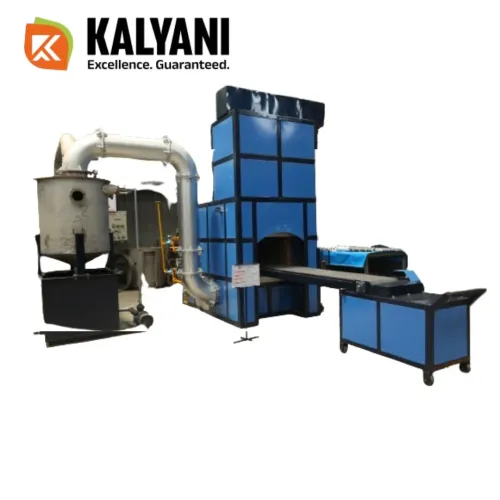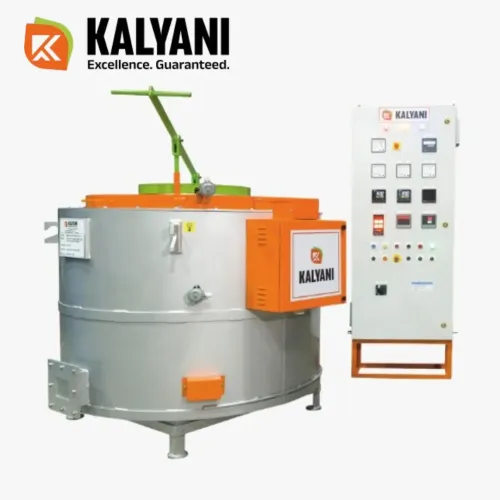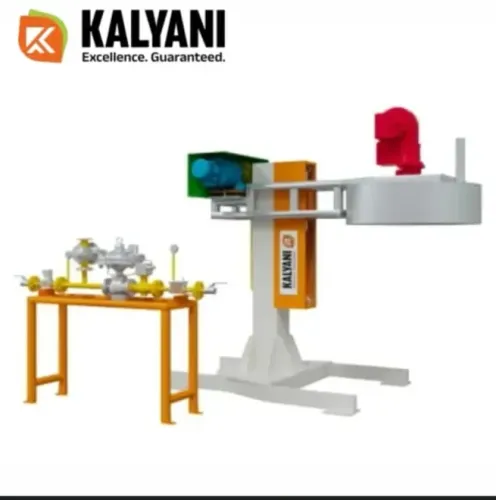

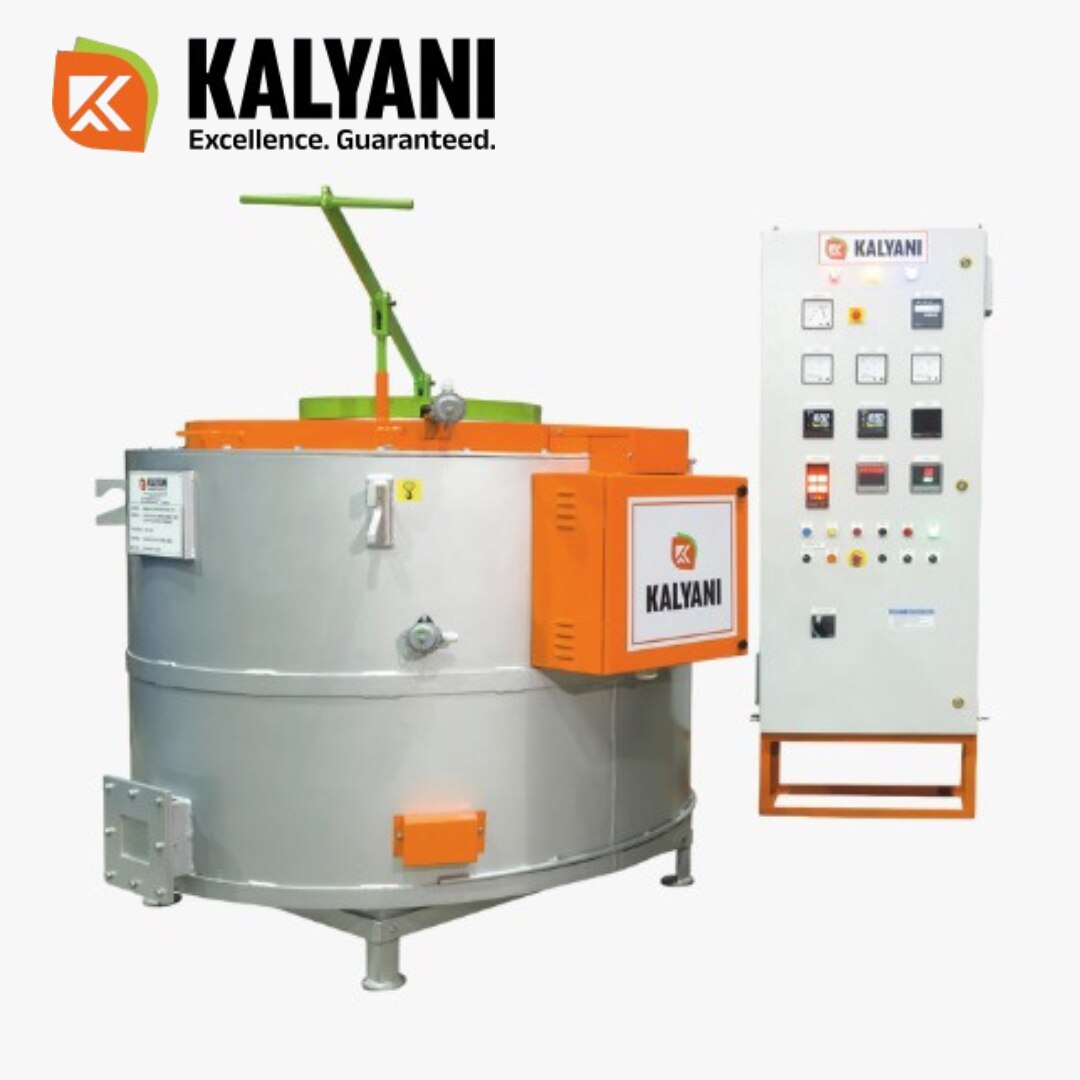
A holding furnace keeps molten aluminium available between melting and casting, but its price depends on usable bath capacity, heating method, controls, refractory design, utilities and installation scope. By comparing the right furnace type, sizing the working volume and normalising every quotation line, you can identify a suitable Bengaluru supplier and avoid an incomplete cost comparison.
Key takeaways
- Size capacity from hourly metal demand, not furnace volume alone.
- Compare temperature uniformity, controls, heating method and refractory specification.
- Request installation, testing, warranty and operating-life details in the quotation.
- Budget for foundations, power or fuel connections, ventilation and commissioning.
What a holding furnace does between melting and casting
After melting, an aluminium holding furnace keeps the bath at the casting temperature while production consumes metal. In a Bengaluru foundry, the melting furnace charges and liquefies ingot or returns; the holding furnace receives that metal, limits temperature loss and surface oxidation, then feeds the die-casting, gravity-die or sand-casting station.
It also buffers delays between furnace tapping and the next pour.
Specify recommended working capacity as well as maximum capacity. Freeboard, dross allowance and the safe operating level reduce usable volume, so a furnace that matches only the machine’s shot weight can still run short during interruptions.
Choose a holding furnace when you need:
- Stable temperature beside the casting machine
- A covered bath with fewer ladle transfers and less air exposure
- Continuous supply during staggered shots, mould changes or brief melting-furnace delays
| Option | Better choice when | Worse choice when |
|---|---|---|
| Holding furnace | Casting runs continuously and needs a stable nearby bath | Production is too irregular to justify a dedicated vessel |
| Melting furnace | You need to melt large charges or maximise melting throughput | You use it as a holding unit; repeated heating increases oxidation, energy use and metal loss |
| Heated ladle | You move modest quantities between distant stations or batches | Long holding times, frequent transfers or strict temperature stability make heat loss costly |
| Electric resistance holding pot | You need compact, clean, precise holding for a small or medium bath | Capacity, rapid recovery or heavy charging exceeds the pot’s design |
Ask an aluminium holding furnace supplier to state the charging method, discharge arrangement, lid access and usable bath volume. A holding furnace is the wrong investment if a heated ladle already meets your short, infrequent transfer cycle.
How to size capacity and match the furnace to your casting process
Specify working capacity, not only the crucible’s advertised maximum. Retain freeboard, dross allowance and a safe bath level; ask for both maximum and usable capacity in kilograms or tonnes. Treat aluminium holding furnace supplier cost in Bengaluru as a comparison label, not a standard rate.
- Record shot weight, castings per hour, replenishment rate, longest planned interruption and safety reserve. Size the usable bath against that demand.
- Choose geometry around access and heat loss: a narrow deep bath reduces exposed surface, while a rectangular furnace simplifies ladle access and cleaning.
- State the outlet height, diameter and delivery method. A bottom outlet, side tap, stopper rod, pump or riser tube changes metal-transfer control.
- Specify charging through a top lid, side door or automatic feeder, including ingot, returns and dross-handling access.
| Process | Capacity and geometry | Outlet arrangement | Charging method |
|---|---|---|---|
| Die-casting | Match rapid shot demand; compact, deep bath | Metered bottom or side outlet to launder or pump | Frequent automatic ingot and return charging |
| Gravity-die | Add reserve for ladle filling and pauses; accessible rectangular or cylindrical bath | Side tap or tilting pour for ladle access | Manual or mechanical top charging |
| Low-pressure-die | Size for continuous feed and interruption reserve; sealed pressure-rated chamber | Low outlet with riser tube or controlled bottom connection | Dry charge through a sealed port |
| Sand-casting | Allow batch variation and longer holding; wide access for cleaning | Tilting body or front tap for ladles | Manual charging through a large lid or door |
Temperature control, heating choice and refractory specification
Electric heating gives cleaner, quieter control and avoids combustion products near the bath; fuel firing can deliver higher heat input and remain practical where gas infrastructure is strong. Compare measured specific energy consumption, not heater or burner rating alone: use kWh per tonne held or fuel per tonne-hour under the same duty cycle.
| Heating | Strength | Main drawback |
|---|---|---|
| Electric resistance | Precise modulation, clean furnace atmosphere, simpler exhaust | Element replacement and electrical-capacity costs |
| Fuel-fired | High heat input and potentially lower utility cost | Burner tuning, exhaust, flame-failure protection and oxidation risk |
Specify how temperature is measured. Ask for an immersion thermocouple or protected probe positioned in representative metal, plus a second independent over-temperature sensor; a wall sensor alone can read refractory temperature instead of bath temperature. Require a PID controller, solid-state relay or SCR for electric power, and a PLC/HMI trend display when traceability matters.
The lining quotation must name the hot-face refractory, insulating backup, thickness, expected lining life, repair material and dry-out procedure. Aluminium penetration, dross accumulation, wet tools and chemical attack shorten life, so include inspection access and a defined repair method. Dense alumina-based castable with compatible insulation is a specification to evaluate, not an assumed standard.
Include lid and discharge interlocks, over-temperature shutdown, low-level or dry-fire protection, spill containment, emergency isolation, flame-failure shutoff for burners, and guarded hot surfaces. When comparing an aluminium holding furnace price in Bengaluru, separate these controls, thermocouples, elements or burners, refractory replacement, calibration, installation and spares; a cheaper quotation can cost more during downtime.
What an aluminium holding furnace quotation in Bengaluru should include
A generic ₹/kg figure is not a useful budget for an aluminium holding furnace price in Bengaluru. Request three comparable totals: equipment-only, delivered-to-site, and installed, commissioned and operator-trained. Define usable working capacity, maximum temperature, throughput, furnace type, heating medium, chambers, charging and transfer equipment before comparing offers.
Ask the supplier to itemise:
- GST, freight, unloading, crane or forklift handling
- Foundation, gas piping, chimney, electrical cabling and control-panel connection
- Erection, dry-out, commissioning, performance testing and training
- Warranty period, service response time and first refractory or heating-element replacement
- Burners or elements, thermocouples, relays, fuses, crucibles, lids, seals, calibration and repair materials
A holding furnace quotation in Bengaluru should label every amount as ex-works, delivered, or installed. Compare the offers on the same basis:
| Basis | What the price covers | Cost still to add |
|---|---|---|
| Ex-works | Furnace leaving the factory | Freight, GST, handling, civil work, utilities, erection and commissioning |
| Delivered | Transport to your Bengaluru plant | Unloading, positioning, connections, testing and training |
| Installed | Equipment, erection and commissioning | Recurring fuel or electricity, consumables, spares and future lining work |
Reject a quote that gives only nominal capacity; demand maximum and recommended working capacity, including freeboard and dross allowance. KALYANI FURNACES INDIA PVT LTD can be asked to separate capital equipment from recurring heating-element, thermocouple and refractory costs. Compare five-year energy use, lining life, spare availability and service downtime, not merely the purchase price.
Site preparation, acceptance testing and operating life
Send a site pack before requesting a holding furnace quotation in bengaluru. Include alloy grades, hourly casting rate, shot weight, maximum interruption time, required bath temperature, charging method, discharge height, available floor area, foundation drawing, electrical or gas supply, chimney route, lifting access and ambient conditions.
Ask whether the price is ex-works or includes delivery, unloading, erection, commissioning, training and GST.
Do not treat aluminium holding furnace supplier cost in bengaluru as a standard rate. Compare the same basis, including:
- Transport, crane or forklift handling, civil work, cabling, gas piping and chimney work
- Warranty period, service response time and spare-parts availability
- First refractory or heating-element replacement cost
Put a loaded-bath acceptance test in the purchase order. Empty-furnace demonstrations hide temperature recovery problems and metal leakage.
| Test | Supplier must record | Reject or rectify if |
|---|---|---|
| Heat-up and maximum temperature | Time, setpoint and measured temperature | Target is not reached |
| Temperature stability | Variation at the bath and outlet | Variation exceeds the agreed band |
| Usable capacity | Kilograms held below the safe level | Only geometric capacity is claimed |
| Drain and leakage | Controlled discharge and emergency drain | Metal remains trapped or leaks |
| Safety interlocks | Lid, overtemperature, flame or door trips | Heating continues after a fault |
Maintain refractory dry-out records, inspect for cracks and metal penetration, remove dross before it builds up, and keep tools dry. For electric models, document the applicable edition and part of IEC 60519-1, then verify earthing, overload protection, unintended-energisation prevention and control-failure shutdowns.
Frequently asked questions
What does an aluminium holding furnace do between melting and casting?
It receives molten aluminium from the melting furnace, maintains the casting temperature, reduces heat loss and oxidation, and supplies metal to the casting station.
How do you size an aluminium holding furnace?
Match usable capacity and recovery rate to hourly casting demand, transfer losses, production interruptions and the required reserve volume.
Which heating and temperature-control details should you compare?
Compare the heating method, control accuracy, thermocouple arrangement, temperature uniformity, insulation and refractory materials, and protection against aluminium penetration.
What should an aluminium holding furnace quotation in Bengaluru include?
Ask for usable capacity, heating input, control equipment, refractory specification, dimensions, utilities, installation scope, commissioning, acceptance tests, warranty and exclusions.
What site work is needed before installing a holding furnace?
Prepare the foundation, access route, electrical or fuel connections, ventilation, safety clearances, molten-metal transfer route and space for maintenance.