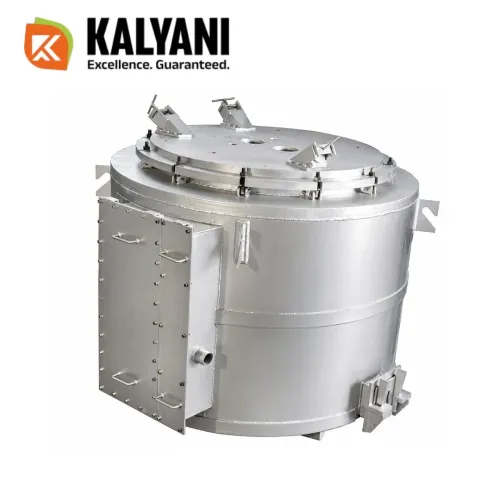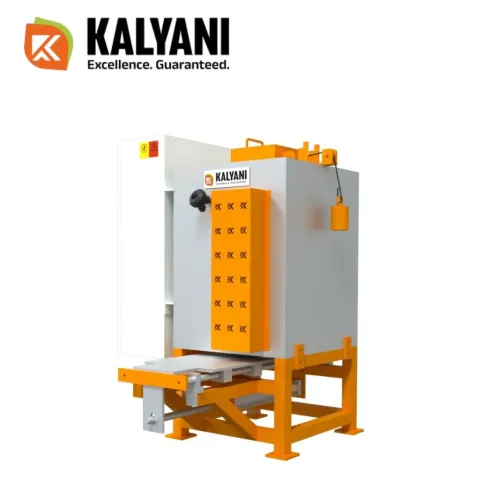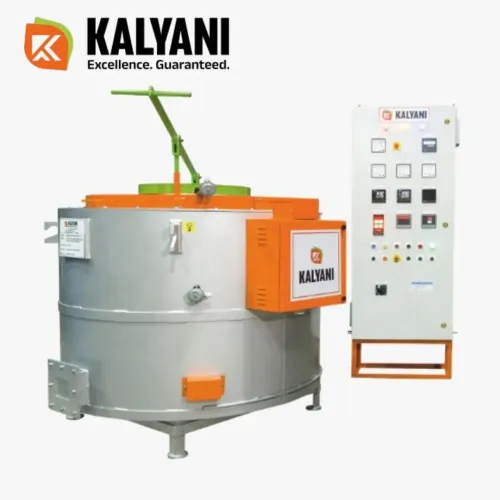

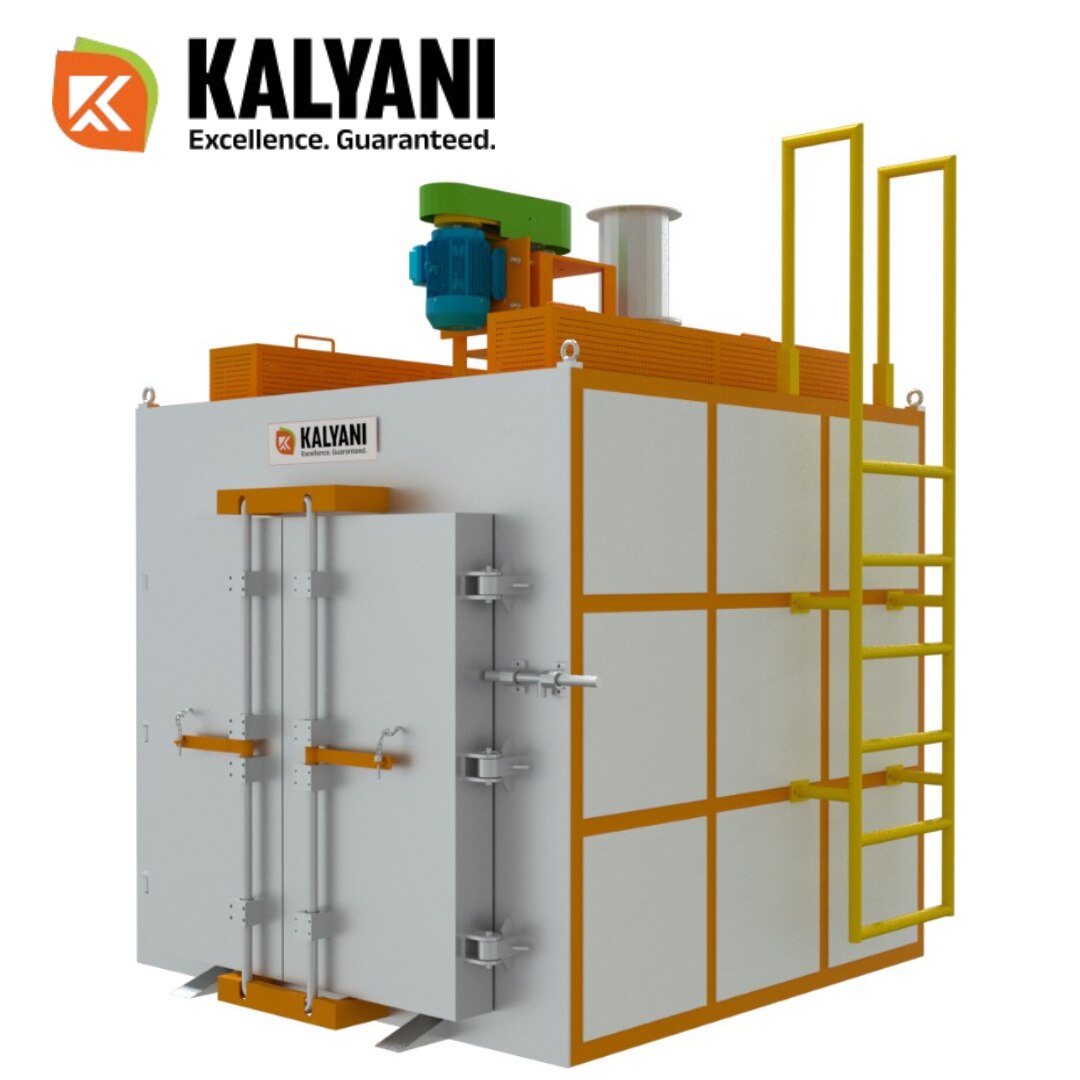
A core oven and a ladle preheating furnace solve different thermal problems: one cures or dries sand cores uniformly, while the other drives heat into a refractory-lined vessel and removes moisture safely. By the end, you will be able to compare capacity, temperature, airflow, heating method, controls, utilities, safety provisions, and supplier test data before requesting quotations in Pune.
Key takeaways
- Separate core curing ovens from ladle preheating furnaces before comparing quotes.
- Specify oven capacity by core load, rack layout, cure temperature and airflow.
- State binder chemistry, exhaust needs, controls and temperature uniformity in the quotation.
- Require ladle heat-up, refractory temperature, moisture safety and performance guarantees.
Separate core curing from ladle preheating before comparing quotations
A core baking oven cures chemically bonded sand cores at a controlled, relatively uniform temperature; a foundry ladle preheating furnace dries and heats a refractory-lined vessel. They are not interchangeable equipment.
| Equipment | Core baking oven | Ladle preheating furnace |
|---|---|---|
| Purpose | Cure binder, remove moisture and prevent cracking, distortion or under-baking | Dry refractory, drive out residual moisture and build heat through the lining |
| Typical process | About 150–250 °C, with controlled airflow and holding time | About 300–800 °C, with a defined heat-up curve and staged drying when required |
| Main design priority | Loaded temperature uniformity, air circulation and repeatable batch cycles | Heat penetration, combustion or high-power heating, thermal-shock control and safe handling |
| Load | Racks or trays holding cores with clear airflow paths | Ladle geometry, lining thickness, refractory condition and orientation |
| Critical risk | Cold zones cause incomplete curing; excessive heat can damage cores | Damp refractory can flash water into steam on molten-metal contact and eject metal violently |
For specifications in Pune, request separate quotations for core baking ovens and a foundry ladle preheating furnace. A generic “industrial furnace” description can hide missing requirements such as batch mass, loaded uniformity, ladle heat-up time, exhaust, interlocks and independent over-temperature protection.
Specify the process temperature and heat-up curve, not just maximum temperature. Treat ladle inspection, controlled drying and confirmation of a dry lining as operating procedures; the furnace does not replace them. Combine the packages only when one supplier proves both processes through relevant loaded trials with recorded measurements.
Specify the core oven by loaded process demand, not empty chamber size
Size the oven from the cold core batch entering each cycle, not from empty chamber volume. State the core mass per batch, maximum envelope, starting temperature, target temperature, holding time and required cycle time. A large chamber with insufficient installed power will heat slowly and miss production output.
For core baking oven specifications in Pune, give the supplier these loaded-process inputs:
- Usable chamber dimensions after allowing rack clearance and air circulation
- Tray or trolley arrangement, loading pattern and maximum batch mass
- Moisture or binder heat load, including water that must evaporate
- Operating range, loaded temperature uniformity and recovery time after door opening
- Insulation thickness, door arrangement and exhaust capacity
- Electrical connected load or fuel input, controller type and thermocouple locations
The heating calculation must include product heat, evaporated moisture, racks, refractory and estimated losses divided by cycle time. Otherwise, the oven may reach its setpoint empty but recover poorly with production cores.
| Comparison | Empty-chamber specification | Loaded-process specification |
|---|---|---|
| Capacity | Internal volume in cubic metres | Core mass, envelope, rack layout and air gaps |
| Heating duty | Installed heater rating alone | Heat load, target temperature and cycle time |
| Uniformity | One controller sensor reading | Temperature mapping at several locations with the normal load |
| Acceptance | “Uniform heating” claim | Loaded uniformity, such as ±5–10 °C, plus heat-up and recovery tests |
| Curing repeatability | Setpoint display | Recorded batch recipe, holding time and product temperatures |
Ask for a trial using your heaviest normal batch. A single sensor beside the heater cannot prove that cores at the trolley centre will cure consistently.
Match binder chemistry, airflow and controls to the core-making process
Choose the heating method from the binder’s cure window, not from the oven’s maximum temperature. Resin-bonded cores commonly bake around 150–250 °C; inorganic, water-based cores need controlled moisture removal before full strength develops.
For core baking oven specifications in Pune, state the binder type, core mass, starting moisture or temperature, target temperature, ramp rate, holding time and permitted loaded uniformity.
| Binder system | Heating and airflow choice | Controls to specify |
|---|---|---|
| Resin-bonded | Recirculated electric air or indirect gas heating; exhaust volatile binder products without stripping heat too quickly | Setpoint, ramp, dwell, exhaust rate, fan proof, and independent high-limit cut-out |
| Inorganic, water-based | Recirculated air with staged drying and adjustable exhaust; prevent a dry surface trapping moisture inside the core | Humidity or exhaust control where needed, ramp limits, dwell confirmation, airflow proof, and load thermocouples |
Do not accept a single sensor beside the heater as evidence of curing quality. Map temperatures at the loaded core positions, including corners, centre racks and the return-air side, then run a heat-up and recovery test at production load. Set an acceptance band such as ±5–10 °C around the process setpoint.
Require door interlocks, emergency stop, fan-failure protection and an independent over-temperature device; confirm NFPA 86 applicability alongside Indian statutory and insurer requirements. A large chamber with weak circulation can over-cure cores near the heater while leaving stagnant zones under-baked.
Define ladle heat-up performance, refractory temperature and moisture safety
A safe ladle preheating furnace must prove a refractory heat-up curve, not merely quote burner output or maximum temperature. State the ladle capacity, empty mass, lining material and thickness, starting temperature, target refractory temperature, heating rate, cycle time, and measurement position.
A typical target falls between 300 and 800 °C, depending on whether you are drying, heating for charging, or retaining hot-metal temperature.
Request these performance records before accepting the ladle preheating furnace specifications:
- A loaded trial using your ladle or an equivalent mass and lining.
- Temperature readings at the bottom, sidewall, and opposite wall, showing circumferential and depth-wise uniformity.
- Furnace-atmosphere and refractory readings separately; one does not prove the other.
- Burner, radiant-tube, or electric-element layout, including protection against local flame impingement and refractory overheating.
- Heat-up and hold data for a cold ladle, not only an empty-furnace demonstration.
| Evidence | What it proves | What can mislead you |
|---|---|---|
| Embedded or contact refractory thermocouples | Actual lining temperature and heat penetration | Atmosphere temperature alone |
| Infrared readings | Surface comparison between locations | Emissivity, scale, flame interference, and viewing angle |
| Multi-point temperature profile | Even bottom, sidewall, and opposite-wall heating | A single central reading |
| Drying procedure and sign-off | Inspection, staged drying, and moisture removal before charging | Treating furnace performance as a substitute for operating procedure |
Inspect cracks, lining damage, standing water, and damp patches before heating. Confirm the lining is dry before molten aluminium enters; residual moisture can flash to steam and eject metal violently.
Check Pune utilities, installation access and supplier performance guarantees
A Pune site survey must precede the quotation. Record available three-phase voltage, connected-load limit, fuel type and pressure, compressed-air quality, exhaust route, chimney height, ventilation, and the permitted flue arrangement. Check the route from unloading bay to installation point, including door widths, roof height, crane capacity, floor loading, foundation level, and maintenance clearance.
1. Send the supplier one signed load sheet: core mass and dimensions per batch, ladle capacity and lining thickness, starting temperature, target temperature, heat-up curve, cycle time, production rate, and acceptable uniformity.
The phrase core baking ovens foundry ladle preheating furnace for specifications in Pune must resolve into two packages unless one loaded trial proves both processes.
2. Request a written utility schedule showing electrical connected load or fuel consumption at the stated load, exhaust volume, control voltage, and recovery time after door opening. A no-load figure proves little.
3. Require a performance guarantee stating maximum working temperature, loaded temperature uniformity, heat-up time, batch throughput, recovery time, energy use, enclosure surface temperature, and control accuracy, with sensor locations, test load, instruments, and acceptance method. Ask what remedy applies if the trial fails.
4. Confirm independent over-temperature cut-out, emergency stop, door interlock, airflow or fan-failure protection, fault logging, and power-failure response. Check NFPA 86 applicability with your insurer and Indian authorities.
Before charging aluminium, inspect the ladle, dry damp refractory through the agreed staged procedure, and document dryness. KALYANI FURNACES INDIA PVT LTD should provide these conditions in the acceptance test, not leave them as an unwritten operating assumption.
Related product
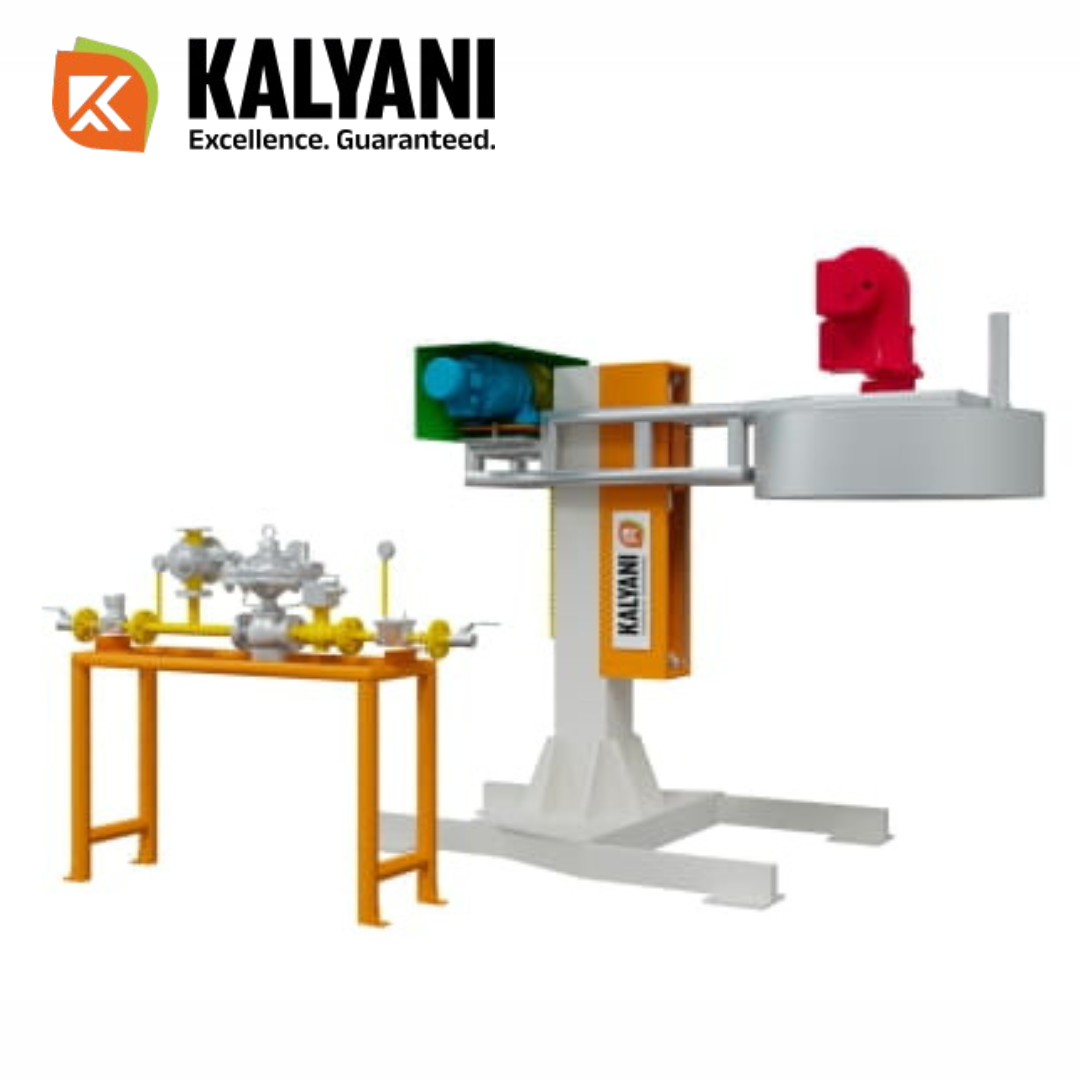 | Foundry Equipment Foundry Ladle Preheating Furnace Product Overview Kalyani Furnaces India Pvt. Ltd. is a leading Foundry Ladle Preheating Furnace manufacturer based in Pune, India, established in... |
Frequently asked questions
How do core baking ovens differ from ladle preheating furnaces?
A core baking oven cures chemically bonded sand cores at a controlled, relatively uniform temperature. A ladle preheating furnace dries and heats a refractory-lined vessel, so its burner arrangement, heat-up profile and moisture controls differ.
What information should you provide when specifying a core baking oven in Pune?
Provide the loaded core mass, core dimensions, rack layout, binder chemistry, curing temperature, cycle time, airflow requirement, exhaust arrangement and permitted temperature variation. Do not specify the oven by empty chamber volume alone.
Which details belong in a ladle preheating furnace specification?
State ladle capacity and dimensions, refractory lining, target refractory temperature, heat-up time, fuel or electrical supply, burner position, moisture-removal provisions and interlocks that prevent unsafe heating of wet refractory.
What should you check with a Pune furnace manufacturer before installation?
Check available electrical load, fuel pressure, ventilation, chimney routing, floor loading, door and crane access, commissioning scope, temperature mapping, operator training and written performance guarantees.