
A foundry must control two different thermal tasks: curing an investment-casting shell and drying a refractory-lined ladle before molten metal contact. By the end, you will be able to map each process step, choose measurable temperature controls, compare heating methods, and prepare a Delhi installation brief that addresses safety, capacity, and emissions.
Key takeaways
- Dry every refractory coat before applying the next layer.
- Control furnace ramp, soak, airflow, and cooling separately.
- Remove ladle moisture before raising its temperature for service.
- Verify shell and ladle temperature with calibrated instruments.
How the shell baking furnace process prepares an investment shell
The mould enters the shell baking furnace only after the final coat has dried and the pattern has been removed without damaging the shell. Prepare and inspect the pattern, apply refractory slurry, then stucco sand; let each layer drain and dry before adding the next.
Shell thickness, drying time, humidity, and airflow decide whether coats bond or trap moisture.
- Build successive coats until the specified wall thickness is reached.
- Remove the pattern only after the shell has adequate green strength.
- Bake or cure the shell to remove water and develop handling strength.
- Inspect for cracks, delamination, soft spots, and incomplete drying before dewaxing or casting.
The shell baking furnace process is not dewaxing or high-temperature burnout. Those later stages remove wax, residual organics, and binder volatiles.
| Binder system | Drying and curing implication | Specification point |
|---|---|---|
| Colloidal silica | Needs controlled drying to avoid moisture defects | State drying humidity and airflow |
| Ethyl silicate | Requires binder-specific curing and burnout control | Confirm cure and exhaust requirements |
| Sodium silicate | Has different moisture and burnout behaviour | Validate the cycle with trial shells |
Use a programmable ramp, not one uncontrolled setpoint: rise slowly through moisture removal, climb to about 150–250°C, soak until the thickest shell reaches core temperature, then cool gradually. Treat this as a trial profile; thicker shells need slower ramps and longer soaks, while alloy and later burnout requirements can change the final cycle.
What the furnace cycle must control: ramp, soak, airflow, and cooling
A nameplate temperature does not define a usable cycle. Record these job conditions before loading: shell material, binder, wall thickness, batch mass, starting temperature, target temperature, ramp rate, soak duration, and cooling method. The shell baking furnace process must be validated under production load.
1. Start with a ramp of roughly 1–3°C per minute. Slow it further for thick, recently coated, closely packed, or damp shells; rapid heating can trap moisture and cause cracking or blistering.
2. Keep shelves spaced for circulation. Packed trees develop colder internal surfaces, while shells touching radiant elements can overheat on one face. Provide a defined exhaust path for binder vapours and resin fumes.
3. Place thermocouples at the door, centre, top, bottom, and coldest expected position. Compare their readings throughout a loaded trial cycle; an empty-chamber reading proves nothing about uniformity in production.
4. Use a curing soak around 150–250°C, then cool naturally or under controlled airflow below the shell’s handling temperature. Confirm the actual profile with test shells and adjust the soak for thickness and binder system, including colloidal silica, ethyl silicate, or sodium silicate.
A shell baking furnace equipment specification must state usable chamber dimensions, batch mass, ramp and soak control, thermocouple locations, airflow, and exhaust capacity. Do not confuse this low-to-moderate curing cycle with high-temperature burnout, which removes wax and volatiles and demands different exhaust control. Stop for cracking, blistering, unexpected smoke, or thermocouple disagreement.
How to carry out foundry ladle preheating without trapping moisture
The foundry ladle preheating process starts with inspection, not burner ignition. Trapped moisture can become steam on contact with molten aluminium, causing violent metal ejection, even when the outer steel looks dry.
1. Check the steel shell, refractory lining, working coating, lip, trunnions, lifting points, vents, and drain area. Reject the ladle for cracked lining, loose refractory, blocked vents, damaged coating, or water contamination until it is repaired and dried under a documented procedure.
2. Begin with low heat to remove absorbed moisture from the refractory and coating. Raise the temperature in stages, allowing each stage to penetrate the lining before increasing the setpoint.
3. Set the final target from the ladle size, refractory type, lining condition, working coating, and alloy. Do not specify 800°C for every aluminium ladle. Hold long enough for the refractory to reach the approved condition, not merely for the outer shell or ladle mouth to become hot.
4. Use indirect gas heat, recirculated hot air, or distributed electric elements where possible. Direct flame impingement creates hot spots and coating damage. During the hold, record the setpoint, measured lining temperature, time at temperature, and operator name.
5. Transfer the ladle only after the record confirms dryness and temperature. Keep it covered or in heated standby if delay could cause cooling. Shut down through the heater sequence, isolate fuel or electrical supply, record faults, and inspect the ladle after cooling.
Coordinate preheating with skimming, fluxing, and degassing. It reduces moisture-related melt risks but does not replace melt treatment.
How to prove a shell or ladle is hot enough—and safe to use
A shell or ladle is safe to use only when a measured point in the material—not the flame, chamber air, or outer steel skin—meets the written target and minimum soak time approved for that lining, binder, and alloy. In the shell baking furnace process, place fixed thermocouples or contact probes to represent the loaded shell.
For the foundry ladle preheating process, measure at more than one depth or location when practical; a hot mouth can conceal wet refractory below.
| Method | Strength | Main error to control |
|---|---|---|
| Fixed thermocouple | Records the load or lining temperature continuously | Poor placement gives a falsely reassuring reading |
| Contact probe | Checks a selected shell or refractory surface | Inconsistent pressure and location distort comparisons |
| Infrared thermometer | Fast, non-contact screening | Set emissivity correctly and keep a clean sight line at a suitable angle; shiny steel and changing refractory surfaces mislead |
Stop heating, transfer, or pouring for any of these signs:
- Steam, hissing, sudden metal ejection, or an unexpected temperature drop
- Lining cracks, spalling, blistered coating, or metal freezing at the lip
- An uncured shell that cracks during handling, releases resin fumes, or fails during dewaxing
Wet ladles can turn trapped moisture into steam and cause violent ejection or an explosion. Fuel-fired equipment also needs purge, flame supervision, fuel shutoff, combustion-air control, exhaust, and abnormal-condition interlocks. Install hot-surface guards, ventilation, fire protection, and restricted access.
NFPA 86 provides a useful furnace safety reference; verify Indian electrical, gas, fire, and pollution-control duties separately.
How to compare heating systems and specify equipment for a Delhi foundry
Choose the heating method from the load, cycle, and Delhi site utilities—not from a generic furnace label.
| Option | Strength | Limitation and required services |
|---|---|---|
| Electric resistance | Clean, combustion-free air; precise ramps; simpler exhaust | Needs adequate connected electrical load and can recover slowly after heavy loading |
| Gas firing | High throughput and fast recovery | Needs fuel pressure, combustion air, flue, purge, flame-failure protection, safety shutoff valves, and maintenance |
| Induction | Efficient for conductive metal heating | Does not suit every ceramic shell or lined-ladle drying task; confirm the load first |
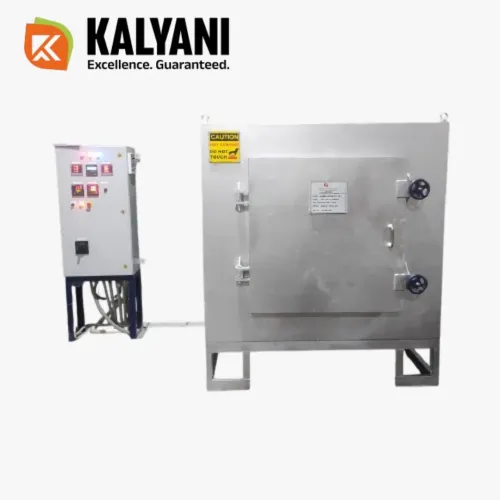
Specify shell baking furnace equipment with usable chamber dimensions, maximum batch mass, working-temperature range, heat-up and recovery time, ramp and soak controls, temperature-uniformity tolerance, thermocouple count and positions, insulation construction, door arrangement, exhaust capacity, shelf spacing, and maintenance access. “High-temperature oven” is not a usable specification.
Estimate heater capacity from shell or ladle mass, refractory mass, chamber structure, heat losses, insulation, airflow, and required recovery time. Oversizing causes cycling and overshoot; undersizing lengthens production time.
Give a foundry furnace manufacturer in Delhi two separate data sheets:
- Process data: load, temperature profile, batch frequency, recovery target, and acceptable uniformity.
- Site data: voltage and phase, available connected load, fuel quality and pressure, exhaust route, ventilation, floor loading, ambient conditions, access, and commissioning tests.
For foundry ladle preheating in Delhi, include lining temperature measurement and a documented dryness check. KALYANI FURNACES INDIA PVT LTD belongs in the comparison when its proposal records these values and identifies Delhi Pollution Control Committee consent and emission obligations, rather than relying on brochure ratings.
Related product
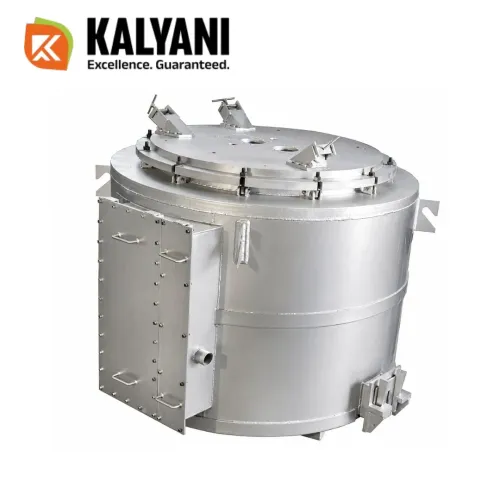
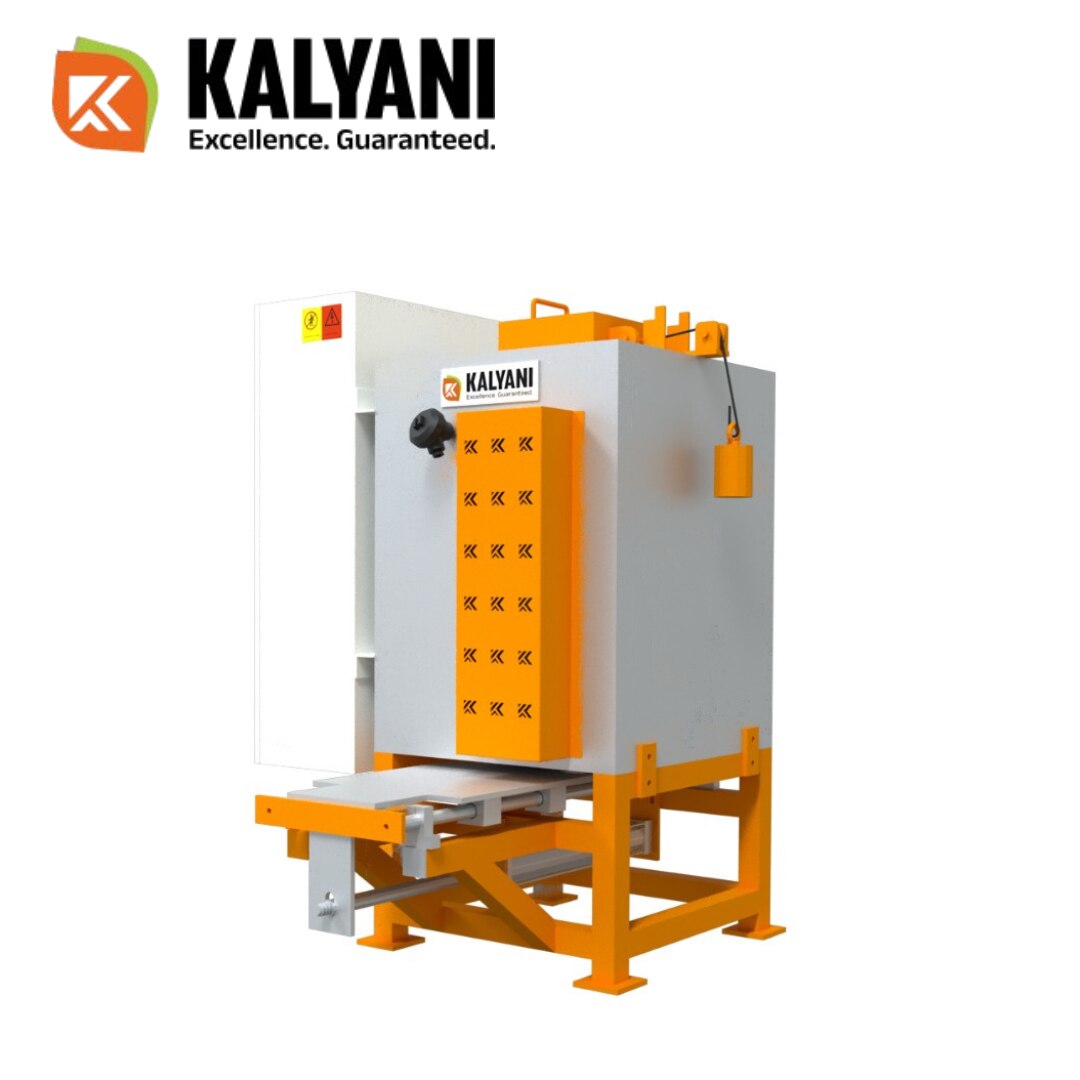
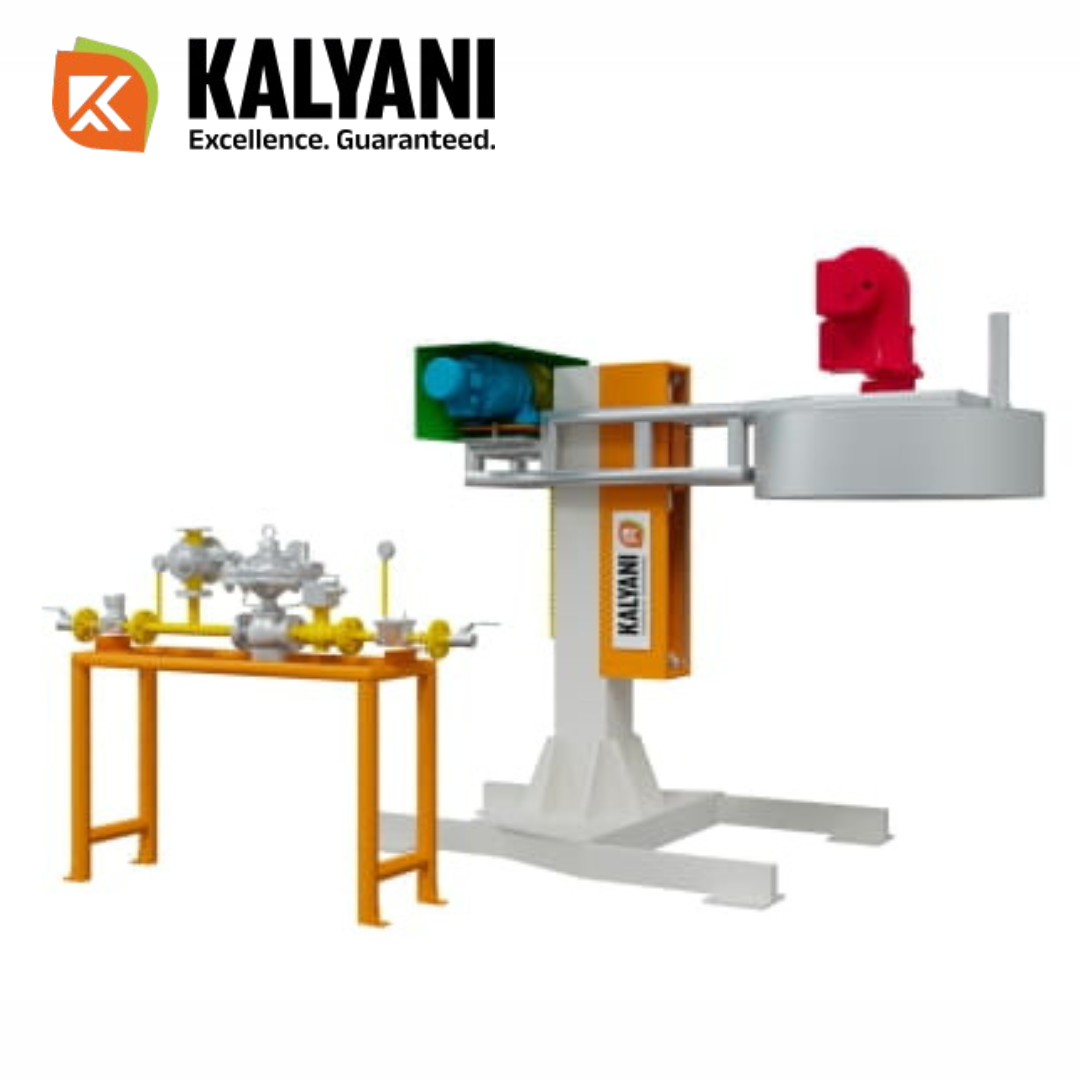 | Foundry Equipment Foundry Ladle Preheating Furnace Product Overview Kalyani Furnaces India Pvt. Ltd. is a leading Foundry Ladle Preheating Furnace manufacturer based in Pune, India, established in... |
Frequently asked questions
How does the shell baking furnace process prepare an investment shell?
After the final refractory coat dries and the pattern is removed, bake the shell to remove residual moisture, strengthen the refractory layers, and prepare the mould for pouring.
Which furnace-cycle controls matter during shell baking?
Control the heating ramp, soak temperature and duration, airflow, and cooling rate. Record each stage so operators can identify cracking, incomplete drying, or thermal shock.
How do you carry out foundry ladle preheating safely?
Inspect the lining, remove debris, and drive out trapped moisture gradually before service. Keep water away from a hot ladle and reject one with damaged lining or unexplained steam release.
How can you prove a shell or ladle is hot enough to use?
Use a calibrated contact probe, infrared thermometer, or temperature recorder suited to the surface and temperature range. Record the reading, time, equipment identity, and operator.
How should a Delhi foundry compare shell baking and ladle preheating equipment?
Compare usable temperature range, ramp control, airflow, insulation, loading capacity, instrumentation, maintenance access, power or fuel supply, and local service support before selecting equipment.